Why Enhance Absorption of Active Pharmaceutical Ingredients?

Time:2026-06-01 Author:Aria
0%

The importance of enhancing the absorption of active pharmaceutical ingredients (APIs) cannot be overstated. Achieving greater absorption directly impacts drug efficacy. Poor absorption can lead to suboptimal therapeutic outcomes. This concern drives researchers to innovate and refine drug formulations meticulously.

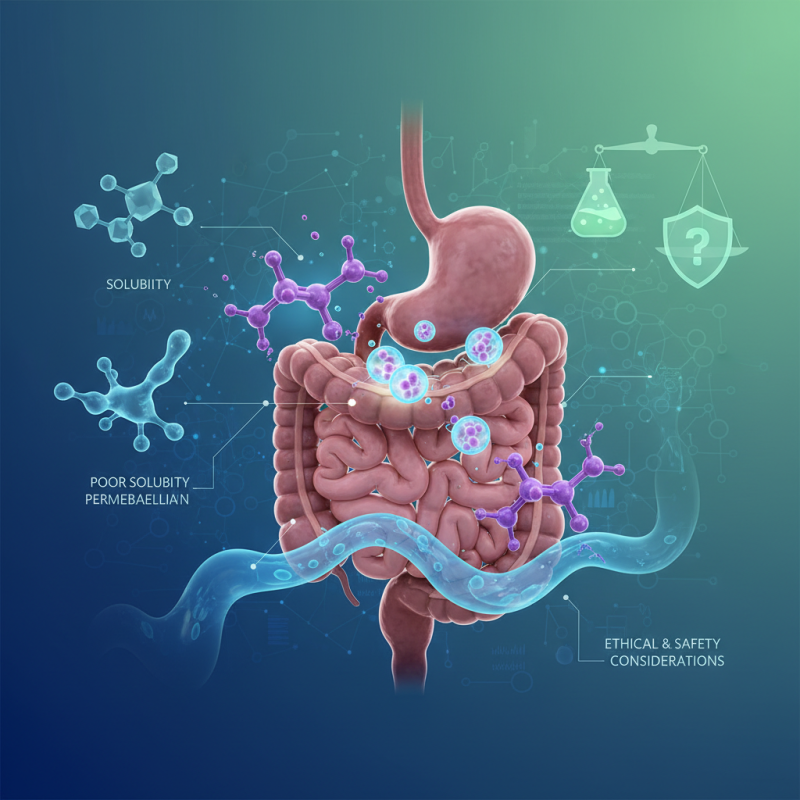
When exploring ways to enhance absorption, multiple factors come into play. The physicochemical properties of APIs significantly influence how well they are absorbed in the body. For instance, solubility and permeability are crucial parameters. They dictate how quickly and efficiently a drug can enter systemic circulation. Yet, despite advances, many drugs still face absorption challenges, leading to questions about current methodologies.

It is essential to engage in continuous research and development to address these challenges. Understanding the interactions between APIs and biological barriers is vital. Moreover, the development of novel delivery systems could significantly improve outcomes. However, the pursuit to enhance absorption often raises important ethical and safety considerations. Every advancement must be critically evaluated for its potential impact on patient health. Thus, enhancing absorption of active pharmaceutical ingredients remains a multifaceted issue that requires ongoing reflection and dialogue.
Why Enhance Absorption of Active Pharmaceutical Ingredients?

Importance of Drug Bioavailability in Pharmacotherapy

In pharmacotherapy, drug bioavailability plays a critical role. It determines how much of a drug enters the bloodstream and reaches the target tissue. If this process is inefficient, patients may not receive the full benefits of their medications. Low bioavailability can lead to ineffective treatment, increased dosing, and heightened side effects.

Factors affecting bioavailability are complex. Drug formulation, the body's metabolic rate, and even patient-specific variables come into play. Some drugs may be poorly soluble in the gastrointestinal tract or quickly metabolized. This can lead to the need for higher doses or alternative administration routes. The challenge lies in maximizing absorption while minimizing adverse effects.

Enhancing the absorption of active pharmaceutical ingredients is crucial. Scientific research continues to explore innovative formulations and delivery methods. However, there are no one-size-fits-all solutions. Each approach has its limitations, and ongoing reflection is needed to improve outcomes. Ultimately, a better understanding of bioavailability can significantly enhance pharmacotherapy and patient well-being.

Why Enhance Absorption of Active Pharmaceutical Ingredients? - Importance of Drug Bioavailability in Pharmacotherapy

Active Pharmaceutical Ingredient Bioavailability (%) Absorption Rate (h-1) Formulation Type
Aspirin 70-90 0.5 Tablet
Metformin 50-60 0.7 Extended Release
Ibuprofen 80-100 1.0 Tablet
Simvastatin 15 0.3 Tablet
Omeprazole 30-40 0.9 Capsule

Factors Affecting the Absorption of Active Pharmaceutical Ingredients

Absorption of active pharmaceutical ingredients (APIs) is crucial for effective medication. Several factors influence this absorption process. One significant aspect is the physicochemical properties of the APIs themselves. For example, their solubility, stability, and permeability can greatly determine how well they are absorbed in the gastrointestinal tract. If an API is poorly soluble, it may not dissolve adequately before reaching the bloodstream.

Another important factor is the formulation of the drug. The presence of excipients can enhance or hinder absorption. The choice of tablet coating or the use of different delivery systems plays a role in how quickly an API enters circulation. Individual patient factors, such as age and health status, also affect absorption variability. Some may have gastrointestinal disorders that alter absorption rates, leading to inconsistent therapeutic effects.

Environmental factors, like pH levels and the presence of food, can impact the absorption as well. For instance, certain drugs are better absorbed in acidic conditions, while others prefer a neutral environment. This variability poses challenges when trying to predict an API's performance. Understanding these factors is essential, yet often neglected in pharmaceutical development, prompting further reflection on how to optimize absorption for better patient outcomes.

Methods to Enhance Drug Absorption in Clinical Practice

Drug absorption is crucial for effective treatment outcomes. Enhancing the bioavailability of active pharmaceutical ingredients (APIs) can significantly influence therapeutic efficacy. According to a recent report from the World Health Organization, approximately 30-50% of drugs suffer from poor absorption. This limitation often results in underdosing or treatment failure.

Clinical strategies to improve absorption are diverse. Techniques like nanoemulsions have shown promise. These formulations can increase the solubility of hydrophobic drugs. Studies have indicated that particle size reduction can lead to a 20% increase in drug absorption rates. Another method involves using permeation enhancers. These additives can modify cell membrane permeability, facilitating drug entry. With a successful application, the absorption efficiency can rise by up to 50%.

Despite these advances, challenges remain. The variability in patient responses to these interventions can complicate treatment plans. Additionally, sometimes, a promising method in one setting may fail in another. Ongoing research aims to address these gaps, ensuring that enhanced absorption techniques become more reliable and universally applicable. Striving for improvement requires both innovative thinking and a better understanding of individual physiological differences.

Role of Formulation Development in Absorption Enhancement

The enhancement of active pharmaceutical ingredient (API) absorption is vital in modern medicine. Formulation development plays a key role in this process. It ensures that drugs reach their target effectively and within the body’s preferred timeframe.

Several factors influence API absorption, including solubility and stability. Scientists often manipulate these factors during formulation. For example, using advanced excipients can increase solubility. However, not all formulations yield the desired effect, highlighting the need for extensive research and trials.

Formulation also considers patient variability. Age, diet, and health conditions can affect absorption. This makes developing a one-size-fits-all solution challenging. Continuous reflection on outcomes is essential for improvement. Effective formulation must address diverse patient needs while ensuring safety and efficacy. Research never truly ends; there’s always room for innovation.

Impact of Patient Factors on Drug Absorption Efficiency

Drug absorption is influenced by various patient factors that can greatly affect therapeutic outcomes. For instance, age, gender, and genetic makeup can alter drug absorption efficiency. A study reported that elderly patients often have reduced gastric acidity, impacting the solubility of certain oral medications. Additionally, genetic polymorphisms can lead to variations in metabolizing enzymes, affecting how effectively a drug is absorbed and utilized in the body.
Tips: Maintaining a consistent medication schedule can improve absorption. Also, drinking enough water aids in the dissolution of drugs.

Moreover, comorbid conditions play a significant role in drug dynamics. Patients with gastrointestinal disorders may experience reduced absorption due to altered gut transit times or mucosal permeability. For instance, conditions like Crohn’s disease or irritable bowel syndrome can hinder drug efficiency by modifying absorption sites. These patient-specific factors demonstrate the complexities involved in ensuring optimal therapeutic outcomes.
Tips: Always communicate any existing health conditions to healthcare providers. This information is vital for personalized medication management.

FAQS

: What is drug bioavailability?

: Drug bioavailability measures how much of a drug enters the bloodstream and reaches the target tissue.

Why is bioavailability important in pharmacotherapy?

Low bioavailability can lead to ineffective treatment and increased side effects.

What factors affect drug bioavailability?

Factors include drug formulation, metabolic rate, and individual patient characteristics.

How can drug absorption be enhanced?

Techniques like nanoemulsions and permeation enhancers can significantly improve absorption.

What is a common issue with drug absorption rates?

Around 30-50% of drugs suffer from poor absorption, resulting in underdosing or treatment failure.

Why are one-size-fits-all solutions rare in drug formulation?

Patient variability such as age, diet, and health conditions complicates uniform solutions.

How do formulations impact drug solubility?

Advanced excipients can be used to increase solubility, influencing drug absorption.

What challenges remain in enhancing drug absorption?

Variability in patient responses can complicate treatment and make methods less reliable.

Why is continuous research necessary in pharmacotherapy?

Ongoing research helps identify gaps and improve reliability in absorption techniques.

How does patient-specific variability affect drug effectiveness?

Differences in metabolism and health status can influence how well drugs are absorbed and utilized.

Conclusion

Enhancing the absorption of active pharmaceutical ingredients (APIs) is crucial for improving drug bioavailability, which directly affects the efficacy of pharmacotherapy. Various factors, including the physicochemical properties of the drug, the formulation design, and patient-specific characteristics such as age, metabolic health, and diet, play significant roles in determining the absorption rates of these APIs.

To enhance absorption in clinical practice, several methods are employed, including optimizing drug formulations and utilizing advanced delivery systems. The role of formulation development is fundamental, as it can facilitate better solubility and stability of APIs, thereby increasing the likelihood of successful absorption. A comprehensive understanding of both the inherent characteristics of the APIs and the individual patient's factors is essential for maximizing drug absorption efficiency and ensuring effective therapeutic outcomes.

Aria

Aria

Aria is a dedicated marketing professional with a deep passion for innovative strategies and a keen understanding of our company's product offerings. With a wealth of experience in the industry, Aria excels at crafting engaging content that highlights the unique features and benefits of our......