How to Improve Solubility and Dispersibility of Instant Powders?

Time:2026-05-19 Author:Aria
0%

Improving the solubility and dispersibility of instant powders is essential for many industries, including food, pharmaceuticals, and cosmetics. Instant powders often face challenges when it comes to dissolving in liquids. This can lead to uneven mixtures, low bioavailability, and poor consumer experience. Enhancing solubility and dispersibility of instant powders opens new opportunities for product development.

Practical approaches exist to tackle these challenges. Techniques like incorporating surfactants or using advanced processing methods can significantly impact. However, the effectiveness of these methods may vary depending on the specific powder and its formulation. It's crucial to evaluate each approach's practicality and limitations. Some methods may yield inconsistent results, raising questions about their reliability. Recognizing these complexities is key to successful product formulation.

Understanding the science behind these enhancements is vital. Knowledge of material interactions, particle size, and moisture content is essential. Achieving optimal solubility and dispersibility involves collaboration across disciplines. Continuous exploration of new technologies and methods remains necessary. By focusing on reliable techniques and rigorous analysis, the industry can move towards more effective solutions.
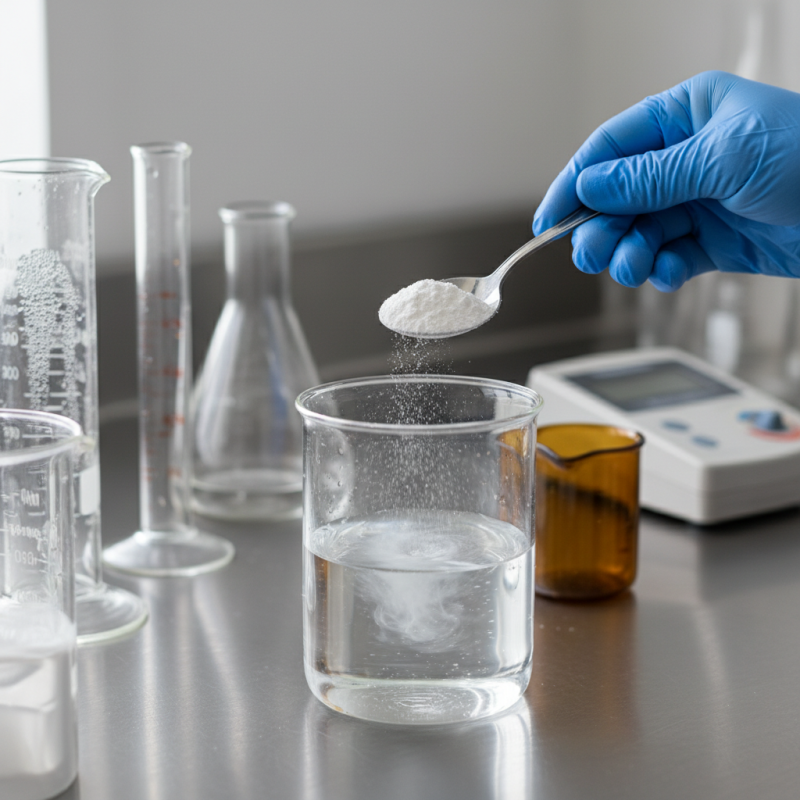
How to Improve Solubility and Dispersibility of Instant Powders?

Strategies for Enhancing the Solubility of Powdered Ingredients

When dealing with instant powders, improving solubility and dispersibility can be challenging. Many factors influence these properties, including particle size and formulation techniques. Reducing particle size through milling can enhance solubility significantly. Smaller particles have a larger surface area, allowing for quicker dissolving in liquids.

Incorporating solubilizers or emulsifiers may also aid in enhancing solubility. These additives help create a stable mixture, preventing clumping. Additionally, optimizing the pH of the solution can further increase the effectiveness of powdered ingredients. A controlled pH promotes better interaction between the powder and solvent.

However, relying solely on these methods may not be sufficient. Some powders may still resist dissolving, showing how complex this process can be. Often, trial and error is necessary. Testing different combinations of techniques may lead to improved outcomes. Continuous evaluation of results is crucial to find the best strategy. As with any formulation endeavor, a flexible approach may yield the best results.

Mechanisms of Dispersibility Improvement in Instant Powder Formulations

When discussing the mechanisms of dispersibility improvement in instant powder formulations, it is crucial to focus on several key factors. One such factor is particle size. Smaller particles tend to disperse more easily in liquids. This enhances solubility, allowing for a smoother blend in end-products. Moreover, the surface area of a powder drastically influences its behavior in water.

To effectively improve solubility, consider the use of surfactants. These compounds can reduce the surface tension of the liquid. Lower surface tension aids in the wetting of powders, thus enhancing their dispersibility. Additionally, incorporating specific carriers can provide stability and even promote a more uniform distribution in mixtures.

Tips: Experiment with varying particle sizes to find the best fit for your formulation. Keep a log of changes and outcomes—this will provide useful insights. Always evaluate different surfactants, as their properties can vary dramatically.

Balancing solubility with taste can be challenging. Some additives may alter flavor profiles. Test blends carefully to ensure quality remains high. Even small adjustments can lead to significant improvements. Continuously monitor your formulations and be willing to refine your approach as you gather data.

Role of Particle Size Reduction in Solubility and Dispersibility

The particle size of instant powders significantly impacts their solubility and dispersibility. Reducing particle size increases surface area. A greater surface area allows for more interactions with solvents. This is crucial for achieving quick dissolution in applications like beverages or foods.

However, not all methods of size reduction are equally effective. Mechanical milling, for instance, can create heat that affects product integrity. It’s vital to balance particle size with thermal stability. Smaller particles can also agglomerate, leading to clumping in solutions. This can hinder solubility.

Experimentation with different techniques is often necessary. Some manufacturers may find that a specific size leads to optimal results, while others experience challenges. Understanding the relationship between particle size, solubility, and dispersibility helps in formulating better instant powders. Regular feedback and adjustments during production can lead to improvements over time.

Impact of Surface Modifications on Powder Dissolution Rates

Surface modifications significantly influence the dissolution rates of instant powders. By altering the physicochemical properties of powder surfaces, we can enhance their solubility and dispersibility. Techniques like coating, granulation, and even plasma treatment have shown promising results in optimizing these characteristics. A report by the International Journal of Pharmaceutics found that surface-treated particles can dissolve up to 30% faster than untreated ones.


Additionally, modifying the particle size and shape contributes to improved dispersion. Smaller particles tend to have a higher surface area to volume ratio, resulting in quicker dissolution. However, achieving the ideal particle size is a balancing act. Too small a size can lead to flowability issues and inconsistencies in the formulation. Experts suggest maintaining an optimal range to minimize these complications.


In some cases, not all modifications yield desired outcomes. Some surface treatments can lead to a reduction in the overall bioavailability of the active compounds, which is a reflection of the complexity of powder interactions in various environments. Addressing these challenges requires ongoing research and innovative approaches in powder technology. Success in improving solubility and dispersibility often hinges on a refined understanding of these intricate dynamics.

Applications of Plant-Based Excipients in Powder Solubility Enhancement

In the realm of pharmaceuticals, plant-based excipients are gaining popularity for enhancing powder solubility. These natural compounds often improve dispersibility, leading to better bioavailability. A recent industry report indicates that the global market for these excipients is projected to grow at a CAGR of 7.5% through 2028, highlighting their importance.

Certain polysaccharides, such as gum arabic and guar gum, act effectively as solubilizers. They can increase the wettability of powders, thus facilitating faster dissolution. Additionally, recent studies show that incorporating such excipients can reduce the time for complete dissolution by nearly 30%. However, not all plant-based excipients are suitable for every formulation, and their effectiveness can vary based on the type of active ingredient.

**Tips:** When selecting excipients, consider their source and molecular weight for optimal results. Always conduct preliminary tests to identify potential interactions between excipients and active ingredients. Monitoring solubility under different pH conditions can also help determine the most effective formulation strategy. Adjust your approach based on performance metrics from earlier trials, as ongoing refinements can lead to substantial improvements in powder solubility.

How to Improve Solubility and Dispersibility of Instant Powders? - Applications of Plant-Based Excipients in Powder Solubility Enhancement

Plant-Based Excipient Solubility Improvement (%) Dispersibility Index Application Area
Guar Gum 80 1.5 Food Products
Xanthan Gum 75 1.7 Beverages
Psyllium Husk 85 1.4 Dietary Supplements
Agar-Agar 70 1.6 Gel Products
Locust Bean Gum 78 1.5 Dairy Products
Chia Seed Extract 82 1.3 Health Bars

FAQS

: What factors influence the solubility of powdered ingredients?

: Particle size and formulation techniques are key factors affecting solubility.

How can reducing particle size improve solubility?

Smaller particles have a higher surface area, allowing them to dissolve in liquids more quickly.

What role do solubilizers and emulsifiers play?

They create stable mixtures and prevent clumping, enhancing solubility.

How does pH optimization affect powdered ingredients?

A controlled pH improves interaction between the powder and solvent, aiding solubility.

Is it enough to rely solely on common methods for solubility?

No, some powders may still resist dissolving, highlighting the complexity of the issue.

What can impact dissolution rates of instant powders?

Surface modifications such as coating and granulation can significantly impact dissolution rates.

How do modifications to particle size and shape affect powders?

They improve dispersion and increase the rate of dissolution, but balance is important.

What might happen if particles are too small?

A size that is too small can cause flowability issues and inconsistencies in formulation.

Can all surface modifications be beneficial?

Not always; some can reduce the bioavailability of active compounds, creating new challenges.

Why is ongoing research important in powder technology?

It helps address complexities and improves understanding of dynamic powder interactions.

Conclusion

In the quest to enhance solubility and dispersibility of instant powders, several strategies can be employed to overcome common challenges. Key methods include optimizing the particle size reduction, which significantly influences how quickly and effectively powders dissolve in solution. Additionally, surface modifications can play a crucial role in improving dissolution rates by altering the physicochemical properties of the particles.

Moreover, the application of plant-based excipients has emerged as an innovative approach to boost powder solubility. These natural compounds not only enhance the dissolution process but also promote better distribution within formulations, ensuring uniformity and effectiveness. By combining these strategies, manufacturers can create instant powders with superior solubility and dispersibility, paving the way for more efficient and user-friendly products.

Aria

Aria

Aria is a dedicated marketing professional with a deep passion for innovative strategies and a keen understanding of our company's product offerings. With a wealth of experience in the industry, Aria excels at crafting engaging content that highlights the unique features and benefits of our......